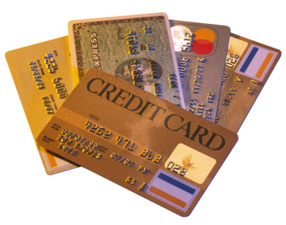
Accept Credit Cards On Your Website

How Difficult Is It To Accept Credit Cards On Your Website?

If you are selling a product or service on your website, you know it is critical to accept credit cards on your website. It can be a little overwhelming to investigate the options for accepting credit cards on your website so this is my attempt to simplify it for you. Feel free to contact me if you have any questions about any of this.

How To Accept Credit Cards

There are a few services you need to have in place to accept credit cards on your website and I will first describe them and then give you the best options for setting up the services to start accepting credit cards online. If you’re not interested in how the technical details of how a merchant account works, you can skip down to the Best Options section below.

Payment Gateway

When a credit card payment is originated on a website, it takes place on a secure website using SSL technology to protect the information being transmitted. Any website owner can get SSL security on their website but most smaller merchants use pages hosted by their payment gateway to process the transaction securely. The payment gateway receives the information for the transaction and transmits the info to the payment processor.

Payment Processor

The payment processor receives the transaction information from the payment gateway and sends the transaction to the card association (Visa, Mastercard, American Express). After the charge is approved or denied, the response will be sent back to the payment gateway so a order confirmation or error can be displayed for the purchaser. All this information is passed in only a few seconds. If the transaction is approved, the issuing bank for the credit card will release funds to the merchant’s listed account.

Simplified For You

Credit Card Merchant AccountIt is overwhelming when you realize all the steps that take place to accept credit card payments on your website. Luckily, there are many companies that offer merchant account solutions for website owners to easily begin receiving credit card payments. You won’t need to worry about payment gateways, payment processors, and credit card issuing banks. Everything will be handled for you after the initial setup is complete and you can concentrate on driving people to your website to generate orders.

I have used different processors over the past several years and have determined two very good options that cover the needs of most small and large website owners. I’ll describe them below.

Best Options To Accept Credit Cards

Option #1 – Paypal – Higher Transaction Fees, Ease of use, No monthly fee

Many website owners that are looking for a simple solution to accept credit cards on their website use Paypal. Paypal provides an affordable entry with their Website Payments Standard service. This service has no setup fee and no monthly fee. The downside of the Paypal Website Payments Standard service is that the fees are higher than other merchant account services. The fees for Paypal are currently 2.9% + $0.30 per trasaction. The rate does decrease for higher sales volume accounts.

Even though Paypal charges higher fees, the simplicity of getting started using the service along with the fact that there are no startup fees or monthly fees makes Paypal Payments Standard service a great option to start selling online.

Paypal


Option #2 – Authorize.net – Lower Transaction Fees, Higher Functionality, Monthly Fee and Setup Fee

For those sellers that sell higher monthly volumes and are looking for a more professional and customizable look to the checkout process, Authorize.net is a great option. Authorize.net is one of the most widely used merchant account services on the web. Many large well-known companies use Authorize.net for processing transactions. I have used it myself for years and can attest that the service and technology is very good.

One of the main benefits of using Authorize.net is lower transaction fees. The price per transaction will vary depending on your business but can be as low as $0.10 per transaction. Authorize.net allows batch transactions so if you process 20 websites per day on average, you can batch process them at one time at the end of the day to reduce the number of batch transaction charges to one per day.

Although you can save money in the long run with lower transaction fees, there is a $99 setup fee and monthly fee for a merchant account through Authorize.net.

Even though there are monthly charges for a merchant account through Authorize.net, the savings in transaction fees are well worth it for merchants who sell high volumes monthly.

Authorize.net also offers more flexibility over Paypal like the ability to accept E-check payments, use recurring monthly payments, and implement a Shopping Cart system to give more advanced features like coupons, quantity discounts, order followup and more.

Authorize Net

Sign up for Authorize.net now and start accepting credit cards on your website.

Mobile Website vs. Mobile App

For Broad Marketing Outreach, A Mobile Website is the Place to Start

If you’re planning to establish a mobile presence for your business or organization one of the first considerations that will likely come to mind is whether you want to create a mobile application for users to download (app) or a mobile website, or perhaps both. Mobile websites and apps can look very similar at first-glance, and determining which is most suited to your needs will depend upon a number of factors, including target audiences, available budget, intended purpose and required features.

What’s the Difference Between a Mobile Website and an App?

Before you can evaluate the benefits of a mobile website vs. an app it’s important to understand the key differences between the two. Both apps and mobile websites are accessed on a handheld devices such as smartphones (e.g. iPhone, Android and Blackberry) and tablets.

A mobile website is similar to any other website in that it consists of browser-based HTML pages that are linked together and accessed over the Internet (for mobile typically WiFi or 3G or 4G networks). The obvious characteristic that distinguishes a mobile website from a standard website is the fact that it is designed for the smaller handheld display and touch-screen interface.

Like any website, mobile websites can display text content, data, images and video. They can also access mobile-specific features such as click-to-call (to dial a phone number) or location-based mapping.

Apps are actual applications that are downloaded and installed on your mobile device, rather than being rendered within a browser. Users visit device-specific portals such as  Apple’s App Store, Android Market, or Blackberry App World in order to find and download apps for a given operating system. The app may pull content and data from the Internet, in similar fashion to a website, or it may download the content so that it can be accessed without an Internet connection.

Which is Better – an App or a Mobile Website?

When it comes to deciding whether to build a native app or a mobile website, the most appropriate choice really depends on your end goals. If you are developing an interactive game an app is probably going to be your best option. But if your goal is to offer mobile-friendly content to the widest possible audience then a mobile website is probably the way to go. In some cases you may decide you need both a mobile website and a mobile app, but it’s pretty safe to say that it rarely makes sense to build an app without already having a mobile website in place.

Generally speaking, a mobile website should be considered your first step in developing a mobile web presence, whereas an app is useful for developing an application for a very specific purpose that cannot be effectively accomplished via a web browser.

Advantages of a Mobile Website vs. Native Apps

If your goals are primarily related to marketing or public communications, a mobile website is almost always going to make sense as a practical first step in your mobile outreach strategy. This is because a mobile website has a number of inherent advantages over apps, including broader accessibility, compatibility and cost-effectiveness.

CheckImmediacy – Mobile Websites Are Instantly Available
A mobile website is instantly accessible to users via a browser across a range of devices (iPhone, Android, BlackBerry, etc).  Apps on the other hand require the user to first download and install the app from an app marketplace before the content or application can be viewed – a significant barrier between initial engagement and action/conversion. 

CheckCompatibility – Mobile Websites are Compatible Across Devices
A single mobile website can reach users across many different types of mobile devices, whereas native apps require a separate version to be developed for each type of device. Furthermore, mobile website URLs are easily integrated within other mobile technologies such as SMS, QR Codes and near field communication (NFC).

CheckUpgradability – Mobile Websites Can Be Updated Instantly
A mobile website is much more dynamic than an app in terms of pure flexibility to update content. If you want to change the design or content of a mobile website you simply publish the edit once and the changes are immediately visible; updating an app on the other hand requires the updates to be pushed to users, which then must be downloaded in order to update the app on each type of device. 

CheckFindability – Mobile Websites Can be Found Easily
Mobile websites are much easier for users to find because their pages can be displayed in search results and listed in industry-specific directories, making it easy for qualified visitors to find you. Most importantly, visitors to your regular website can be automatically sent to your mobile site when they are on a handheld (using device-detection).  In contrast, the visibility of apps are largely restricted to manufacturer app stores.

CheckShareability – Mobile Websites Can be Shared Easily by Publishers, and Between Users
Mobile website URLs are easily shared between users via a simple link (e.g. within an email or text message, Facebook or Twitter post). Publishers can easily direct users to a mobile website from a blog or website, or even in print. An app simply cannot be shared in this fashion.

CheckReach – Mobile Websites Have Broader Reach
Because a mobile website is accessible across platforms and can be easily shared among users, as well as search engines, it has far greater reach capability than a native app. 

CheckLifeCycle – Mobile Websites Can’t be Deleted
The average shelf-life of an app is pretty short, less than 30 days according to some research, so unless your app is something truly unique and/or useful (ideally, both), it’s questionable how long it will last on a user’s device. Mobile websites on the other hand are always available for users to return to them. 

CheckA Mobile Website Can be an App!
Just like a standard website, mobile websites can be developed as database-driven web applications that act very much like native apps. A mobile web application can be a practical alternative to native app development.

CheckTime and Cost – Mobile Websites are Easier and Less Expensive
Last but certainly not least, mobile website development is considerably more time and cost-effective than development of a native app, especially if you need to have a presence on different platforms (requiring development of multiple apps).

CheckSupport and Sustainability
The investment considerations of app vs website don’t end with the initial launch; properly supporting and developing an app (upgrades, testing, compatibility issues and ongoing development) is more much more expensive and involved than supporting a website over time.

When Does an App Make Sense?

Despite the many inherent benefits of the mobile web, apps are still very popular, and there are a number of specific use scenarios where an app will be your best choice.  Generally speaking, if you need one of the following, an app makes sense:

  • Interactivity/Gaming – for interactive games (think Angry Birds) an app is almost always going to be your best choice, at least for the foreseeable future.
  • Regular Usage/Personalization – If your target users are going to be using your app in a personalized fashion on a regular basis (think EverNote) then an app provides a great way to do that.
  • Complex Calculations or Reporting – If you need something that will take data and allow you to manipulate it with complex calculations, charts or reports (think banking or investment) an app will help you do that very effectively.
  • Native Functionality or Processing Required – mobile web browsers are getting increasingly good at accessing certain mobile-specific functions such as click-to-call, SMS and GPS. However, if you need to access a user’s camera or processing power an app will still do that much more effectivley.
  • No connection Required – If you need to provide offline access to content or perform functions without a network/wireless connection then an app makes sense.

As with any project, when developing an app you want to ensure that your are getting an optimal return on your investment. What you want to avoid at all costs is the needless and expensive exercise of building an app to do something basic that can be achieved with a mobile website.

In Conclusion

As long as mobile remains a relatively new frontier, the “app vs web” question will remain a very real consideration for organizations seeking to establish a mobile presence. If your mobile goals are primarily marketing-driven, or if your aim is to deliver content and establish a broad mobile presence that can be easily shared between users and found on search engines, then the a mobile website is the logical choice. On the other hand, if your goal is interactive engagement with users, or to provide an application that needs to work more like a computer program than a website, then an app is probably going to be required.

Featured Project – Crazy Mayor

A brand new website using the powerful CMS Joomla along with the plugin for the Virtuemart e-commerce system. This site was built to allow the client the ability to change, add, delete everything present on the site. Custom features include several rotating banners that can be controlled from the admin area. Social marketing is also present!

Name: Crazy Mayor
Website: www.crazymayor.com
Features: VirtueMart E-Commerce, Joomla CMS, Rotating Banners, Social Media, Authorize.net Payments

10 Essentials for a Website

So your business has a website — or you’re in need of one for your brand new venture. Web design can be an overwhelming process, so we’ve spoken to a few web designers who told us what you need to have on your site … and what you can probably do without (like crazy Flash animation).

The first thing you must do is secure a good, catchy URL. Make sure it makes sense for your business, doesn’t have quirky spelling and is available on social platforms, too. Panabee can help you get creative if your business name is taken, and Name Vine is a great resource for seeing what’s available.

Once you’ve set up your domain, it’s time to build out the site and make some big decisions. Here are 10 must-haves for your website that will ensure your customers have a positive experience on the site, improve your company’s digital footprint and increase engagement with your brand.

1. A Logical Roadmap

Sure, a website should be aesthetically pleasing, but it’s more important for it to be useful. Before you even pick a server or type an HTML tag, you should map out how you’d like the website to work. This is important both for user experience and for SEO, since Google considers the content and structure of a site when it ranks for search. So, map out and mock up a design for the site — what designers call “wireframing” — and run it by a few friends to make sure it makes sense and is intuitive. “If they can understand the logic, so will the people visiting your website … and Google bots when ranking it!”

2. Crucial Business Information

The biggest failure that people have is that they try to build the website they want, not necessarily the website they need. Take a restaurant, for example — Everyone wants music and this giant ‘about’ page, but they neglect the basic things like the menu, contact information and directions.

Keep text to a minimum when it comes to your mission statement, because you should be writing things so people can skim — we all have short attention spans. One helpful tip for conveying your mission is to compare your business to something else. Don’t underestimate brevity — one or two sentences can be really powerful.

Depending on your business, you should have a few things on your website that fall into the realm of “information.” We know restaurants need a menu and a list of locations (ideally with directions or a map), but every industry has its necessary items. If you’re an e-tailer, you need product images (and they need to be good pictures). If you work in the service industry and have a business that relies heavily on customer service and referrals, put some testimonials on your site. For example, a wedding planner could have one of her recent brides write about her experience with the business. A web designer should include screenshots or link out to previous work. A hair salon could have client testimonials about a stylist’s skills and promptness. Tailor your site so that it offers the information users are likely to be looking for.

3. Contact Information

We can’t stress enough that most crucial business detail is contact information– which is why it has its own section. How many times do you visit a website and think ‘how hard is to contact this company?’ Have a number, email, address and a contact form easily accessible and visible.  It makes a difference because there’s nothing more frustrating than being unable to get in touch with a needed business or service.

When you put an email address or a phone number on the site, don’t upload this information as part of an image — the number or address should be able to be clicked on or copied right from the site in order to place the call or send an email conveniently and quickly. Most smartphones these days have the ability to do “click to call” on the web, so make the process as easy as possible for users.

Don’t want your phone ringing off the hook? Just use an email address, but be sure you answer emails in a timely manner. And please, get an email address for your domain. Using Gmail — or worse, an AOL email address — isn’t professional, and that’s what you’re striving to be. If you like Gmail’s interface, you can use Google Apps to set up custom email addresses through Gmail — it’s free for up to 10 email addresses.

4. Clear Navigation

A map is useless without a legend and a website is useless without clear navigation. Make sure you use easy-to-understand and logical names for the various pages of your site — contact, about, FAQ, etc. Being clever or cryptic will just be a turnoff for users.

When developing your navigation strategy, you should consider a call to action. What is it that you want people to do on your site? Place an order? Email for a quote? Become a member? Come to your brick-and-mortar store? Call to speak with a customer service rep? Make your goals clear and obvious.

“Put yourself in the shoes of who’s coming to your site.” What are they trying to get done? Think about the goal of your potential customer. Pepper the site with action items to help customer easily do what you want them to do. Birchbox has done a good job of this, encouraging users to “learn more” and directing them to claim a gifted Birchbox, since it’s a popular gift item and giftees are likely to be first-time visitors.

5. Security

If you’re selling anything online, you need to put some effort into securing your site with an SSL certificate. The SSL will encrypt communications between you and your clients (i.e. a credit card number, Social Security number), which will allay their fears of providing such information, since there’s so much identity theft on the web.

6. Social Media Integration

Twitter. Facebook. Tumblr. YouTube. Pinterest. Google+. LinkedIn. Instagram. Foursquare. There are a lot of social platforms out there, and you should promote your presence on them on your website, because social media is critical part of marketing your business.

Integrating these platforms into your website will help boost your SEO, improve your business’ footprint on the social web and build your following across numerous social platforms. Is it worth it to maintain a presence on so many social platforms? Yes — as long as you actually maintain your content, you’ll keep your brand top-of-mind and keep users engaged. “Social media is not going to leave us anytime soon and its worth the investment in time — it does make a difference.”

7. A Mobile-Ready Version

Smartphones and tablets are driving an increasing amount of web traffic, and the numbers are only going to grow as mobile devices become cheaper and more mainstream. Andy Chu, director of Bing for Mobile, says 70% of task completion happens within one hour on mobile sites, meaning that people are often browsing on the web with intent — they’re looking to do something, buy something or go somewhere. If someone searches for a restaurant on his smartphone, he’s likely to eat at that restaurant within the hour, says Chu. So your website better be readable on handheld devices.

“Until two years ago, designing for the web meant designing for a computer, now it means designing for anything with an internet connection,” says Frankel, referring to laptops, tablets and smartphones, all of which have different screen sizes. So, how can you do it? Responsive design.

Responsive website design enables you to use fluid widths, so that your website layout will adapt to the screen on which it’s being browsed. You can enter HTML code so that your sidebar takes up, say 20% of the screen width, and the remaining 80% is reserved for the body of your website. Layouts are adjustable and images are scalable to make for a better web experience on myriad devices.

Do you simply want to focus on developing a mobile website? You can use Mobify and other tools to create a mobile version of your website.

8. FAQ

People have a lot of questions. As you hear concerns from customers and receive feedback via email, gather up the most frequently asked questions into a list and offer clear, concise answers. Questions often revolve around materials and ingredients used (for allergy reasons), shipping information, company history, sizing (for apparel brands) and cancellation or return policies.

9. Good Hosting

Don’t mess around with hosting. You need your site on a mainstream provider, and it costs a handful of dollars every month to have 24/7 technical assistance.

Not having good hosting can cost you in many ways. A slow site is frustrating, one that fails to load is obnoxious and both could turn off customers. But beyond annoying your users and increasing your bounce rate, poor hosting can also affect your rank in search engines, since many search engine algorithms detect webpage loading speed.

10. Here’s a Curveball — Some Features You Don’t Need

Don’t underestimate the power of simplicity. Feel free to forgo these things on your website:

  • Music
  • Flash
  • Anything that autoplays, whether it’s music or a video.
  • Extraneous information and media — it’ll only slow down the page’s loading time.

0
Back to Top

Search For Products

Compare (0)